Showing posts with label automobiles. Show all posts

August 27, 2008

Reforming hydrogen from ethanol

There are so many "discoveries" these days I would hate to have to handicap the winners. Some reports inspire confidence that we are on track to make the leap from today to tomorrow - and the next day.

One thing to know about ethanol is that it is a carrier for hydrogen. That means you could deliver ethanol from origin to distribution point and extract the hydrogen from the ethanol. The question has always been how do you do it without expending excess energy or spending money on expensive reforming processes?

Below is an article from Biopact that demonstrates how research focused to answer such questions can lead to discoveries with game-changing results.

What it means is that gas stations that currently service demand for petroleum products but that could eventually sell blends of ethanol may provide a smooth transition to a hydrogen energy economy. They will be able to cheaply reform hydrogen from their stores of ethanol to fill clean hydrogen fuel cell vehicles.

-----------------
Scientists develop cheap catalyst for hydrogen production from biofuels

Scientists from Ohio State University have developed a very cheap non-precious metal catalyst that converts biofuels like ethanol into hydrogen with an efficiency of up to 90%. This development opens up a future of decentralised, on-the-spot hydrogen production for use in fuel cell cars. What is more, it makes the prospect of a carbon-negative transportation fuel more realistic.

The rationale behind converting biofuels to hydrogen is simple: you no longer need an expensive hydrogen transportation infrastructure, because you can transport the fuel safely in the form of the biofuel and turn it into hydrogen wherever you want; using hydrogen in fuel cells is also far more efficient than using biofuels in internal combustion engines.

Best of all, when the carbon dioxide that is released during the conversion process is captured and sequestered, a truly carbon-negative fuel is obtained. The more you were to use of this fuel, the more you were to combat climate change, because you would be actively removing CO2 from the atmosphere (earlier post, and see schematic).

Umit Ozkan, professor of chemical and biomolecular engineering at Ohio State University, says that the new catalyst is much less expensive than others being developed around the world, because it does not contain precious metals, such as platinum or rhodium. Rhodium is used most often for this kind of catalyst, and it costs around $9,000 an ounce. The new catalyst costs around $9 a kilogram - that's about 35,000 times less.

The new catalyst allows us to over come the many practical issues that need to be resolved before we can use hydrogen as fuel - how to make it, how to transport it, how to create the infrastructure for people to fill their cars with it.
Our research lends itself to what's called a 'distributed production' strategy. Instead of making hydrogen from biofuel at a centralized facility and transporting it to gas stations, we could use our catalyst inside reactors that are actually located at the gas stations. So we wouldn't have to transport or store the hydrogen - we could store the biofuel, and make hydrogen on the spot. - Professor Umit Ozkan

The catalyst is inexpensive to make and to use compared to others under investigation worldwide. Those others are often made from precious metals, or only work at very high temperatures. Precious metals have high catalytic activity and - in most cases - high stability, but they're also very expensive. The scientists' goal from the outset was to come up with a precious-metal-free catalyst, one that was based on metals that are readily available and inexpensive, but still highly active and stable. This sets Ozkan's team apart from most of the other groups in the world.

The new dark gray powder is made from tiny granules of cerium oxide - a common ingredient in ceramics - and calcium, covered with even smaller particles of cobalt. It produces hydrogen with 90 percent efficiency at 660 degrees Fahrenheit (around 350 degrees Celsius) - a low temperature by industrial standards.

Whenever a process works at a lower temperature, that brings energy savings and cost savings. Also, if the catalyst is highly active and can achieve high hydrogen yields, one doesn’t need as much of it. That will bring down the size of the reactor, and its cost.

The process starts with a liquid biofuel such as ethanol, which is heated and pumped into a reactor, where the catalyst spurs a series of chemical reactions that ultimately convert the liquid to a hydrogen-rich gas.

One of the biggest challenges the researchers faced was how to prevent "coking" -- the formation of carbon fragments on the surface of the catalyst. The combination of metals - cerium oxide and calcium - solved that problem, because it promoted the movement of oxygen ions inside the catalyst. When exposed to enough oxygen, the carbon, like the biofuel, is converted into a gas and gets oxidized; it becomes carbon dioxide.

At the end of the process, waste gases such as carbon monoxide, carbon dioxide and methane are removed, and the hydrogen is purified. To make the process more energy-efficient, heat exchangers capture waste heat and put that energy back into the reactor. Methane recovered in the process can be used to supply part of the energy.

Though this work was based on converting ethanol, Ozkan's team is now studying how to use the same catalyst with other liquid biofuels. Her coauthors on this presentation included Ohio State doctoral students Hua Song and Lingzhi Zhang.

The research was funded by the U.S. Department of Energy.

References:
Ohio State University: A Better Way to Make Hydrogen from Biofuels - August 20, 2008.


----------------
technorati , , , , , , , ,

January 24, 2008

Surprising MPG results for low blends of ethanol

One of the "knocks" on ethanol (pun intended) is that for all the performance and emissions improvement that it provides as an oxygenate for gasoline, the more that you blend in, the lower the miles per gallon you should expect. For the lay person, that means more frequent stops to the filling station - roughly one extra fill-up for every three the vehicle currently requires. Even at price parity the annoyance of increased stops may deter some from using E85 (which is 85% ethanol/15% gasoline).

While it may be true for high blends of ethanol a new study provides laboratory evidence that E20 and E30 blends actually improved MPG on the automobiles tested!

The University of North Dakota Energy & Environmental Research Center (EERC) and the Minnesota Center for Automotive Research (MnCAR) conducted vehicle fuel economy and emission testing on four 2007 model vehicles. The vehicles tested included a Chevrolet Impala flex-fuel and three non-flex-fuel vehicles: a Ford Fusion, a Toyota Camry, and a Chevrolet Impala.

Highway Fuel Economy Test (HWFET) testing on ethanol blend levels of E20 in the flex-fuel Chevrolet Impala, E30 in the non-flex-fuel Ford Fusion and Toyota Camry, and E40 in the non-flex-fuel Chevrolet Impala resulted in measured miles-per-gallon fuel economy greater than predicted based on per-gallon fuel Btu content. It is notable that the non-flex-fuel vehicles obtained greater fuel economy at higher blends of ethanol than the unleaded gasoline. In the case of the flex-fuel Chevrolet Impala, the highway fuel economy was greater than calculated for all tested blends, with an especially high peak at E20.

While only three non-flex-fuel vehicles were tested in this study, there is a strong indication that non-flex-fuel vehicles operated on optimal ethanol blend levels, which are higher than the standard E10 blend, can obtain better fuel mileage than on gasoline. The Ford Fusion and Toyota Camry obtained a HWFET mileage on E30 of 1% greater than on Tier 2 gasoline; the flex-fuel Chevrolet Impala showed a HWFET mileage of 15% on E20 better than Tier 2 gasoline, as shown in Figure ES-1.

Exhaust emission values for nonmethane organic gases (NMOG), nitrogen oxides (NOx), and carbon monoxide (CO) obtained from both the FTP-75 and the HWFET driving cycles were at or below U.S. Environmental Protection Agency (EPA) Tier 2, light-duty vehicle, Bin 5 levels of 0.090, 0.07, and 4.2 grams/mile, respectively, for all vehicles tested, with one exception. The flex-fuel Chevrolet Impala exceeded the NMOG standard for the FTP-75 on E20 and Tier 2 gasoline.

It should be noted that it will take time to deploy E85 pumps in significant numbers throughout the U.S. During that time, the automobile manufacturers will be working not only on hybrid vehicles which improve MPG by sharing the load with plug-in and battery charges, but they will also be working on improving flex-fuel and ethanol combustion technology.

The automobile industry has had 100 years to fine tune their engines to work on cheap gasoline. Now that there is a mandate in the Energy Bill of 2007 to increase gasoline MPG significantly there will be significant research invested in improving performance on all kinds of fuels and configurations. Perhaps the relative energy content of the fuel will cause less concern to the driving public as the frequency of fuel fill-ups declines.

As far as emissions are concerned, that will be an area of focus for car manufacturers as well. They have innovated catalytic converters and carburetor designs in the past. There is no reason to expect less from them in the future as public demands turns to competitive environmental performance.

We will doubtless see many breakthroughs as thinking outside the fossil fuel paradigm box explodes.

technorati , , , ,

August 28, 2007

"Energy Victory" - Book of the Sentry

In September of 1911, the fate of two world wars was pre-ordained by England's young First Lord of the Admiralty. He made a choice at considerable national economic and political risk that linked England's future to a dependence on its North Atlantic political, military, and trade relationship with America. Still, Winston Churchill decided the advantages far outweighed the liabilities. From that point on all ships in the Royal Navy would run on oil (which England imported) instead of coal (which the British isles could stockpile in rich abundance).

This counter-intuitive decision meant that England's battleships could be built lighter, refuel at sea, and stoke their fires without drawing precious manpower during combat. As he stated it - "If we overcame the difficulties and surmounted the risks, we should be able to raise the whole power and efficiency of the Navy to a higher level."

It was this advantage that eventually destroyed the coal-burning German navy of WWI. It was lack of access to oil supplies that defeated both Germany and Japan during WWII. The Axis powers had trained troops and effective weapons systems but they couldn't hold the front without fuel.


Robert Zubrin, author of the soon to be released Energy Victory: The War on Terror by Breaking Free of Oil, cites this history and contrasts it to our harrowing predicament of today. Not only are we thoroughly dependent on an energy resource we no longer control, but those who do control it now have our treasure to fuel terrorism against us and create chaos around the world. With thirty years warning we have squandered ample opportunity to end our dependence on foreign oil supplies. There is no more time to waste.

It is our time to make a decision like Churchill's: define new alternative energy standards, develop a decentralized plan of production and infrastructure development, and stick with it through decades of administration changeover. The challenge is not to pick one alternative, but to increase the range of choices that enable consumers to make purchase decisions based on value (whatever that may be for each decade) instead of allowing ourselves to coerced into making bad decisions caused by limited access.

I highly recommend Robert Zubrin's book to readers of this blog. It is scheduled to be released October 31st by Prometheus Books. In this well-researched study he paints a picture of our current predicament in the Middle East including foreign intrusions into U.S. policymaking. He follows that with an evaluation of alternatives and a broadbrush plan for how we can substantially reduce our dependence within a decade. He excoriates policymakers who perpetrate what he calls the "hydrogen hoax." He draws lessons from the "Brazil experience" and shows how "The New Alcohol World Economy" can benefit developing and developed nations alike. He also addresses "global warming", explains his cynicism about hydrogen, and defends nuclear power as a clean source of electricity. But the bulk of the book is focused on the use of biofuels to break our dependence on oil.

Book orders can be reserved on Amazon right now. Look for book signings at future alternative energy conferences.

technorati , , , , , , decentralization,

August 20, 2007

High Performance E85 with Jay Leno

E85 detractors often cite the comparative high energy content of gasoline to ethanol. It is true that currently designed combustion engines and even current flex-fuel models get lower mileage on ethanol than they do on gasoline. However, that is far from the whole story.

On Jay Leno's Garage website he features a video titled "E85 Demystified" which contains an interview with noted engine designer Carl Banks who specializes in high performance engine design. Carl insists that the reason that automobiles don't run as well on ethanol as they do on gasoline is because they are not designed to. If they are designed to, the cars would operate with much higher performance because of the relatively high compression ratio of ethanol compared to gas.

"It’s the octane number,” he says. “Octane is a rating of knock-resistance. The higher the number the better. E-85 is 105 octane.”

Coupled with plug-in hybrid automobile technology, it is not likely that there will be an appreciable difference between buying gasoline or ethanol because the mileage will be dependent on electric storage efficiency and the secondary motor efficiency for whatever fuel it runs on. The decision to buy ethanol is likely to hinge on the comparative price of the fuel options and its availability at local pumps.

technorati , , , ,

July 29, 2007

A scientific assessment of plug-in hybrids

Clean Edge News published a story on a new report that analyzes the benefits of PHEVs (Plug-in Hybrid Energy Vehicles).

The EPRI-NRDC study represents the most comprehensive analysis of the potential reductions of global warming and other emissions from wide-scale introduction of PHEVs over time. The study addresses the impact that lower-emitting electricity generation can have for increasing these benefits.

How would air quality and greenhouse gas emissions be affected if significant numbers of Americans drove cars that were fueled by the power grid?

A recently completed assessment conducted by the Electric Power Research Institute and the Natural Resources Defense Council made a detailed study of the question – looking at a variety of scenarios involving the U.S. fleet of power generation and its fleet of light-duty and medium-duty cars and trucks.

The objectives of this study are the following:
• Understand the impact of widespread PHEV adoption on full fuel-cycle greenhouse gas
emissions from the nationwide vehicle fleet.
• Model the impact of a high level of PHEV adoption on nationwide air quality.
• Develop a consistent analysis methodology for scientific determination of the
environmental impact of future vehicle technology and electric sector scenarios.

The study focused on plug-in hybrid electric vehicles (PHEVs) and projected changes in power generation technology from 2010 through 2050.

The EPRI Perspective
Policymakers, technology developers, and utility and environmental planners need objective and accurate information to make sound decisions about developing and deploying PHEVs in support of national energy and environmental policy. PHEVs offer the potential for reducing both emissions and fuel consumption, simultaneously addressing the issues of global warming and the nation’s dependence on imported oil. Quantifying these benefits has proved challenging, however, and misinformation has circulated about the environmental performance of PHEVs.

Summary of Results
Because of the significant reduction in emissions from gasoline and diesel fuel use and because caps are in place for some conventional pollutants for the electric power sector, the study finds that in many regions deployment of PHEVs would reduce exposures to ozone and particulate matter, and reduce deposition rates for acids, nutrients, and mercury.

On the other hand, because of assuming no further controls beyond existing regulations for the power sector, ozone levels would increase locally in some areas. Similarly, the direct emissions of particulate matter and mercury would increase somewhat and some regions and populations would experience marginal increases in exposures to those pollutants. However, as explained in the key findings, PHEVs do not increase the U.S. contribution to the global mercury budget over the long term.

Overall, the air quality benefits from PHEVs are due to a reduction of vehicle emissions below levels required by current regulation (due to their non-emitting operation in all-electric mode), and because most electricity generation emissions are constrained by existing regulatory caps. Any additional increase in the amount of all-electric vehicle miles traveled or further emissions constraints on the electric sector would tend to magnify these benefits.

technorati , , ,

June 22, 2007

GM's "green image" challenge in L.A.


Los Angeles has become a tough car market for General Motors. Toyota sold 50% more Priuses in L.A. last year than all the cars GM sold here combined!
That frank admission was part of the message presented by "good cop" GM North America President Troy Clarke to a small, rapt audience of bloggers at the historic and very scenic HRL Laboratories in Malibu, CA.

GM's corresponding "bad cop" would be Chairman Rick Wagoner who on June 5th at the shareholders' meeting criticized the raising of CAFE standards and the U.S. government's mileage requirements - which, subsequently, were added to the Senate's version of the 2007 Energy Bill. The new legislation mandates increases to average fuel economy by 40 percent to 35 miles per gallon for cars, SUVs and pickup trucks by 2020.

Producing cars that will meet the standard aren't the big problem for GM. However, squeezing that kind of economy from SUVs and pick-up trucks will require risky and significant technological redesigns of the propulsion system (considering the weight of the vehicles and loads they are designed to handle) with no assurance that the standards set by implacable public and political expectations won't move again. Since California is GM's strongest market for trucks (with three times as many GM trucks sold in Southern California than cars), the stakes are very high.

Both Clarke and Wagoner insist that the future of the company is tied to a successful transition away from gasoline-powered technology. They contend that GM currently leads all U.S. manufacturers with over 30 vehicle models that are rated above 30mpg.

Their plans for the market is to continue to introduce a number of new hybrid and electric cars over the next decade. Some of these represent new technological approaches to the twin transportation challenges of increasing fuel efficiency while lowering emissions. Most are planned to be flex-fuel compatible, able to run on any blend of gasoline and ethanol.

Author's note - In my opinion all combustion engines produced by GM factories should be flex-fuel compatible because it doesn't cost much to do at the factory ($50-200/vehicle vs. thousands for hybrid technology) but allows the consumer the greatest number of fuel purchasing options (simultaneously depressing prices while reducing fossil fuel dependence). It will solve the chicken/egg dilemma faced by service stations of having enough compatible ethanol vehicles available to justify installing the pumps. And it starts the clock on when we cycle out all gasoline-only vehicles - which some estimate will take 15 years.

Still, L.A. is a market that relies more on image than on substance. Sometimes that image is the sleek styling and high performance characteristics of the vehicle. However, with the one-two punch of oil addiction and global warming fears, image and status now comes from driving "greener" vehicles - which is why the ho-hum Prius body shape is looking more stylish every day (while Hummer and Suburban owners are ducking accusatory glares from outraged fellow citizens).

So how can GM crack back into the global trendsetting L.A. market? Apparently Troy and GM's local public relations agency, Manning Selvage & Lee (MS&L), believes that building non-traditional relationships with bloggers and their audiences is an effective p.r. strategy - á la The Tipping Point. Convince some passionate, funky bloggers of the company's sincerity and it just might infect their audiences - leading to a cascade of positive image-building and sales.

MS&L calls it One Across Marketing:
One Across Marketing is MS&L's signature approach that strives to build a relationship between a consumer and brand. It focuses entirely on the phenomenon of information "wildfires" or "viruses," which are transmitted by word-of-mouth, usually among individuals who "cluster" (often virtually) around issues, shared situations, lifestyle needs, entertainment pursuits, etc. Driven by one-to-one communications, One Across approaches include: epidemic campaigns, E-community mobilization, influencer seedings, vernacular PR, and grass-tops marketing.

I'm not sure what category I fell into but I'm glad it was good enough to get me invited.

During his speech Troy Clarke talked about effective marketing from his personal viewpoint:
We get the opportunity to talk publicly in the auto industry typically at Auto Shows where we have these wonderfully orchestrated backdrops of cars and models. It is a very tailored environment for us to be able to tell our story to alot of press over a short period of time.

I had the opportunity to do something a little different. In Chicago, interestingly, it was still an Auto Show venue but it was outside the Detroit area and I was asked if I would talk to four bloggers. (I did) and in ten to fifteen minutes this dialog broke out which was kind of a public relations first. I turned to my public relations people and said that this feels a lot better to me than the typical interaction. Part of the reason why is that I learned alot.

Some of this stuff was stuff I didn't want to learn. Some people were making comments to me that I hoped that they wouldn't make. But the fact that they made them accomplished more than I expected.

Well here is a piece of advice from this blogger that I would hope GM and MS&L would hear:
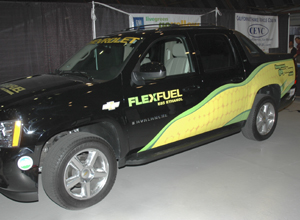
In October 19-20 Santa Monica will host its second Alt Car Expo. Last year's event was much more fun and informative about green transportation at a grass roots level than the glitzy L.A. Auto Show across town (see A Tale of Two Auto Shows). Toyota was a huge beneficiary because most of the alternative designs were converted Priuses. GM had a paltry presence at this event (one flex-fuel pickup and a salt-in-wound carcass EV1) and was not even listed as a sponsor. This year none of the Big Three is a listed sponsor - but Honda is. This show is a green opportunity for GM to build bridges with the Southern California market.

One interesting new propulsion approach that Troy focused attention on is being demonstrated by the new Chevy Volt, a 5-seater concept car. Its "E-Flex Drive" always delivers power to the wheels through its battery charged electric engine. However, after the initial plug-in charge is depleted (at about 40 miles) an onboard flex-fuel combustion motor can generate a surplus charge giving the vehicle a potential range of 650 miles between charge and refill. GM is logging votes from consumers who would like to see the vehicle produced and on the showroom floor. The current tally of nearly half a million votes is about 99.5% in favor. I would gladly sign up to be a test driver.

I came away very impressed by the sincerity of the presentation and the approachability of its speaker. Just walking around on a tour, I was able to steal 5 minutes of uninterrupted time with Troy to talk about my pet projects - promoting the 25x'25 Alliance (I gave him a lapel pin), expanded recycling of waste-to-energy, the energy renaissance potential of a depressed paper and pulp industry, and the need to support local regulatory reform efforts in California.

No, we didn't talk about cars, but the kicker is that he echoed my sentiment that all of these facets are necessary parts of the new continuum that will affect the sale of cars in the coming decades. To make green profits on its green product offerings, GM will not only have to develop and deploy new technologies, but will also have to weather the challenges of fickle public opinion, shortages in raw materials and energy supply, strained labor relations, unpredictable world events, and environmentally sensitive regulatory reform.

It's a daunting task for any multi-national corporation. Of the Big Three in America, I'd put my money on GM.

technorati , , , ,

June 12, 2007

Ethanol Boosting Systems for Automobiles

Biofuel naysayers have a wealth of criticisms to use if they really want to derail the renewable energy juggernaut. "The EROIE is not as good as petroleum" "The feedstock is better used as food" "The emissions from ethanol is more toxic than gasoline" "Subsidies are the only reason that ethanol producers make any profits", etc.

Well the oil industry "wasn't built in a day" either (and the resemblance to Rome is pretty apt). The reality is that if Henry Ford had succeeded in encouraging the use of ethanol when he produced the first Model T, engines would have developed much differently than they did and the EROIE, toxicity, feedstock diversity, and subsidy issues would have been solved a long time ago. Give ethanol a hundred years and lets see how efficient and clean it and other biofuels can be.

Here are excerpts from an October 2006 article in Green Car Congress that demonstrates the potential for redesigned combustion engines that exploit the high octane of ethanol.

----------------
Startup Working to Commercialize Direct Injection Ethanol Boosting + Turbocharging
Ethanol boost with turbocharging promises a cost-effective means to obtain high fuel efficiency in gasoline and flex ethanol/gasoline powered engines.

MIT scientists and engineers earlier this year founded a company—Ethanol Boosting Systems, LLC (EBS)—to commercialize their work on direct-injection ethanol boosting combined with aggressive turbocharging in a gasoline engine. (Earlier post.) The result is a gasoline engine with the fuel efficiency of current hybrids or turbodiesels—up to 30% better than a conventional gasoline engine—but at lower cost.

EBS has a collaborative R&D agreement with Ford, and anticipates engine tests in 2007 with subsequent licensing to Ford and other automakers. If all goes as expected, vehicles with the new engine could be on the road by 2011.

The foundation of the approach is the enhanced knock suppression resulting from the separate, direct injection of small amounts of ethanol into the cylinder in addition to the main gasoline fuel charge.

The injection of a small amount of ethanol into the hot combustion chamber cools the fuel charge and makes spontaneous combustion much less likely. According to a simulation developed by the MIT group, with ethanol injection the engine won’t knock even when the pressure inside the cylinder is three times higher than that in a conventional SI engine. Engine tests by collaborators at Ford Motor Company produced results consistent with the model’s predictions.

With knock essentially eliminated, the researchers could incorporate into their engine two operating techniques that help make today’s diesel engines so efficient: a high degree of turbocharging and the use of a higher compression ratio.

The combined changes could increase the power of a given-sized engine by more than a factor of two. But rather than seeking higher vehicle performance, the MIT researchers cut their engine size in half. Using well-established computer models, they determined that their small, turbocharged, high-compression-ratio engine will provide the same peak power as the full-scale SI version but will be 20 to 30% more fuel efficient.

The ethanol-boosted engine could provide efficiency gains comparable to those of today’s hybrid engine systems for less extra investment: about $1,000 as opposed to $3,000 to $5,000. The engine should use less than five gallons of ethanol for every 100 gallons of gasoline, so drivers would need to fill their ethanol tank only every one to three months. The ethanol used could be E85.

Given the short fuel-savings payback time—three to four years at present US gasoline prices—the MIT researchers believe that their ethanol-boosted turbo engine has real potential for widespread adoption.

To actually affect oil consumption, we need to have people want to buy our engine, so our work also emphasizes keeping down the added cost and minimizing any inconvenience to the driver.
—Daniel Cohn, MIT senior research scientist and CEO of EBS

technorati , , , , ,

May 30, 2007

Amory Lovins - RMI and the Hypercar

The Rocky Mountain Institute is a bastion of knowledge concerning energy efficiency and renewable energy. Much of its expertise focuses on the concept that "a watt saved is a watt earned" demand management can reduce energy expense more dramatically than adding new alternative supply production.

Started in 1982 by Hunter and Amory Lovins, the organization now has 55 employees offering energy, engineering, and efficiency design consultation services. Their website has a special page devoted to explaining RMI's Approach to Energy. But they are not satisfied with merely making recommendations - they are committed to implementing their concepts in significant ways. They work with corporations, municipalities, and energy companies to deploy energy saving technologies for architecture, transit, and utility systems.

One example is their production of the Hypercar® - a fullsize demonstration model that incorporates the use of carbon composites instead of much heavier steel of current manufacture. Their online slide show points out that while 6% of the energy in a car's fuel goes to accelerating the car, less than 1% actually is expended to move the driver. Most goes to moving the car, so that reducing the weight of the car will impact the 2/3 to 3/4 of the fuel use that is weight-related.

The recently redesigned website also features a number of audio and video clips including an appearance by Amory Lovins on The Charlie Rose Show on November 28, 2006. The interchange focused on how the U.S. can eliminate its dependence on oil through market-driven approaches. He talks about RMI's progress in several sectors — including heavy trucks, the military, light vehicles, biofuels, airplanes, and financial — in implementing recommendations made in RMI's book, Winning the Oil Endgame - which has been made available for online download or purchase.

It may have taken 25 years to begin to receive the recognition that the enterprise deserves, but it certainly is well-positioned now to help civilization adjust to a more efficiency-conscious view of energy.

technorati , , , , , , ,

February 21, 2007

INDY 500: Drivers, start your ethanol-fueled engines

This may not be what CalSTEP has in mind as a replacement standard to gas guzzlers on California freeways, but it sure turns heads.

Actually, if you are trying to change perceptions about something as basic as vehicle fuel, showcasing its performance and safety benefits in America's premier racecar event is a no-brainer. Henry Ford, an enthusiastic early promoter of ethanol (a friend of the farmer), would probably say "What took you so long?"

Here is part of the Ethanol Promotion and Information Council recent press release about this year's official IndyCar® Series changeover to 100% ethanol.

----------------
IndyCar Series Sets the Pace in Renewable Fuels
The first and only motorsports series to run ethanol, the IndyCar® Series is at the forefront of this push for renewable energy with its switch to 100 percent fuel-grade ethanol for the 2007 season. This decision makes the IndyCar Series, the cutting-edge leader in motorsports safety and technology, a leader in renewable and environmentally responsible fuel produced in the U.S.

“The IndyCar Series shares the President’s commitment to energy security,” said Brian Barnhart, president and chief operating officer of the Indy Racing League, the sanctioning body of the IndyCar Series. “We accept the challenge of making these goals a reality.”

Indy-style racing has used methanol with impressive results since the late 1960’s. Ethanol shares methanol’s performance benefits, but has clear environmental and safety advantages.

Fuel enriched with a 10 percent ethanol blend used in passenger vehicles reduces harmful tailpipe emissions by as much as 30 percent and the emission reductions are even greater with E85. In 2005, ethanol use in the U.S. reduced carbon dioxide equivalent greenhouse gas emissions by nearly 8 million tons. These gases contribute to global climate change.

“The partnership between the IndyCar Series and the ethanol industry exemplifies the spirit of energy independence, American ingenuity and innovation,” said Tom Slunecka, executive director of the Ethanol Promotion and Information Council (EPIC).


technorati , , , , , ,

February 20, 2007

California's Transportation Action Plan targets 2020

In California, it's all about the cars. Government leaders and consumers alike are questioning what steps they can take and what can they buy that will help ease oil dependence and toxic emissions that come from their vehicles.

It is also a state of "killer apps" - on the hunt for that rare but exhilarating solution that addresses old problems with revolutionary new solutions. The Toyota Prius has become the freshest breath of air within the past three years but it is only a way shower, not a solution.

What is needed is coordination toward a gradual replacement technology paradigm - not only new cars, but new fuels and fuel infrastructures.

Here is a press release from CalSTEP about their recently published plan for addressing these multi-faceted and interlinked issues.

------------------
CalSTEP Unveils Action Plan to Boost California’s Energy Security, Leadership in New Transportation Fuels and Technology
Assembly Speaker Targets Key Recommendations for Action


Sacramento, Calif. – Against a backdrop of advanced vehicles and lower-polluting fuels, the California Secure Transportation Energy Partnership (CalSTEP) today unveiled a comprehensive set of actions geared toward increasing California’s transportation energy efficiency and alternative fuel use by 2020. The CalSTEP Action Plan, developed through research, analysis and consensus-building over the past eighteen months, aims to grow the economy while reducing greenhouse gas emissions.

CalSTEP is a diverse partnership of industry, government, academic and non-profit leaders from automakers to conservation groups. The multi-year Action Plan targets three key areas where the state can take action to secure its energy future: increasing vehicular efficiency; diversifying the state’s fuel supply; and reducing the overall need to drive. The CalSTEP plan makes ten key action recommendations to achieve the overall goals of reducing petroleum use by 15 percent, and increasing alternative fuel use to 20 percent.

With the release of its ten-point Action Plan, CalSTEP also launched the plan’s implementation, welcoming the immediate support of California Speaker of the Assembly Fabian Núñez and other legislative proponents for specific recommendations in the plan.

“I applaud the serious efforts of this diverse group to craft these recommendations for California’s energy future,” said Speaker Fabian Núñez (D-46th District). “California must be the leadership state in developing new transportation technologies and cleaner fuels. I will introduce legislation this Spring to specifically launch one of its recommendations – to create a California program to support alternative fuels and efficient vehicle development and use.”

technorati , , , , , ,

January 9, 2007

CALIFORNIA: Governor Targets Fuel Emissions

Governor Schwarzenegger has announced new targets for gasoline producers to hit in a continuing state campaign to lead the nation in innovative public policy regarding fuels and vehicle emissions.

According to the L.A. Times -

The order could also usher in a new generation of alternative fuels in California, experts say, as refiners consider adding ethanol or other biofuels into gasoline blends. It could also mean a shift of part of the state's auto fleet to hydrogen or electric power.

According to the white paper, a drop of 10% in carbon released by vehicles in California would translate to a 20% drop in gasoline consumption and more than triple the size of the state's renewable-fuels market.

Transportation accounts for more than 40% of California's annual greenhouse gas emissions, and the state relies on petroleum-based fuels for 96% of its transportation needs.

The white paper suggests that a shift to lower-carbon fuels could be supplemented by creation of a market that would trade credits that could be used to satisfy state requirements to lower greenhouse gas emissions.

For example, high-carbon-fuel makers could meet their mandate by purchasing credits from electric utilities that supply low-carbon electrons to electric passenger vehicles.

The mandate also would provide a significant boost to the state's fledgling alternative-fuels industry, said Bill Jones, chairman of Pacific Ethanol of Fresno, the state's leading biofuel producer. Jones was a former California secretary of state and longtime state legislator.

Here is an abridged version of today's announcement as presented on the Governor's website...

-------------------
Gov. Schwarzenegger Issues Directive to Establish World's First Low Carbon Standard for Transportation Fuels

Continuing his historic leadership to reduce greenhouse gas (GHG) emissions and lower California's reliance on foreign oil, Governor Schwarzenegger today announced he will issue an Executive Order establishing a groundbreaking Low Carbon Fuel Standard (LCFS) for transportation fuels sold in California. By 2020 the standard will reduce the carbon intensity of California's passenger vehicle fuels by at least 10 percent. This first-of-its kind standard will support AB 32 emissions targets as part of California's overall strategy to fight global warming.

The LCFS requires fuel providers to ensure that the mix of fuel they sell into the California market meets, on average, a declining standard for GHG emissions measured in CO2-equivalent gram per unit of fuel energy sold. By 2020, the LCFS will produce a 10 percent reduction in the carbon content of all passenger vehicle fuels sold in California. This is expected to replace 20 percent of our on-road gasoline consumption with lower-carbon fuels, more than triple the size of the state's renewable fuels market, and place more than 7 million alternative fuel or hybrid vehicles on California's roads (20 times more than on our roads today).

The LCFS will use market-based mechanisms that allow providers to choose how they reduce emissions while responding to consumer demand. For example, providers may purchase and blend more low-carbon ethanol into gasoline products, purchase credits from electric utilities supplying low carbon electrons to electric passenger vehicles, diversify into low carbon hydrogen as a product and more, including new strategies yet to be developed.


technorati , , , , , , , ,

December 10, 2006

A Tale of Two Auto Shows

Friday's opening of the international Los Angeles Auto Show will feature the usual leggy models draped across carnauba-waxed chassis. It will showcase the usual engine housings, gleaming under spotlights, and futuristic dashboards twinkling like front-yard Christmas displays.

So begins veteran reporter Dan B. Wood of the Christian Science Monitor in his well-written review of Press Day at the Los Angeles Auto Show.

Promoted as a tribute to the green turn the automobile industry is taking, the MPG ratings told the true story of this show - very few automobiles rated above 34 HWY. The buzzword was "power" not "efficiency" - style and glitz over substance. Hybrids were on display but pimped out rides like the Suzuki Xbox with its front and back game screens stole the imagination. Impractical concept sports cars abound at each manufacturer's booth at the expense of reminders about global warming and the oil crisis. In my opinion, GM did not focus adequate attention to their pricy Live Green/Go Yellow campaign publicized with great fanfare less than one year ago.

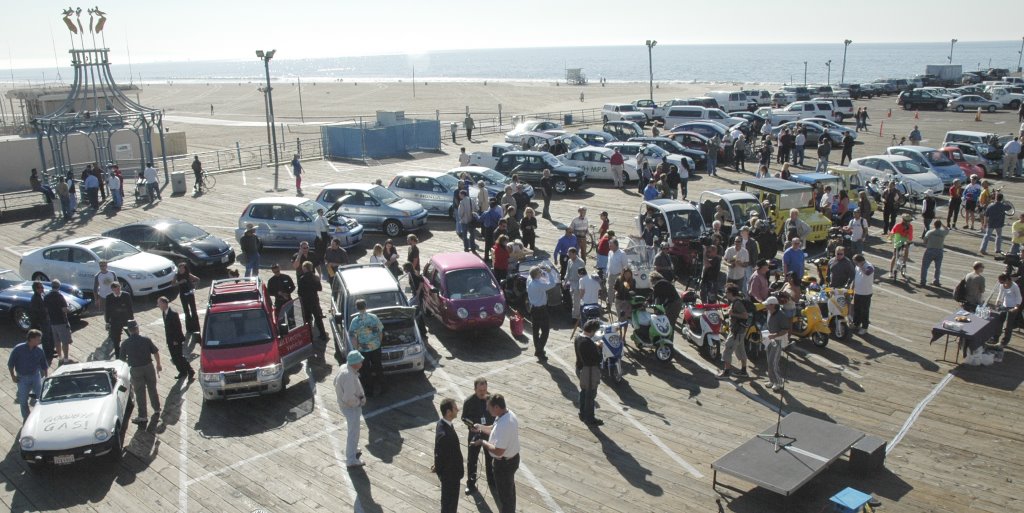
In striking contrast, fifteen miles away in green-and-proud-of-it Santa Monica a different tone was set. The first day of the Alt Car Expo brought car enthusiasts, environmental activists, politicians, celebrities, and families out to see a vision of the future test-driven on the tarmac, displayed in a hanger, and forecast in the seminar room. Many of the hybrids featured plug-ins and were rated at 100+ MPG. Several cars were all electric including one solar-powered Prius with solar cells embedded in its roof.

Star Sighting!
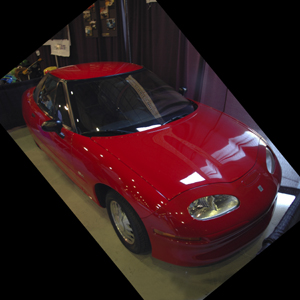
Emblematic of the difference of these two shows was one of the last EV-1 automobiles in public existence. In defiant red, this non-functioning but fully loaded martyr of auto history - the star of "Who Killed the Electric Car?" - had to be hauled to this site on a flatbed truck and manually pushed into position. Hopefully this is not the eventual fate of the American auto industry. The only GM presence at this show was a GM Avalanche flex-fuel pick-up truck - neither Ford nor Chrysler had any presence at all.

In addition to the wide variety of vehicles on display during Media Day, attendees were able to visit the exhibition booths of about sixty-five vendors and organizations. Spotted in the crowd were auto legend Lee Iacocca, environmentalist Ed Begley, Jr., former L.A. Councilmember and urban plannerMichael Woo, and CA Assemblymember Fran Pavley, author of numerous emissions capping bills in California.

It was in the seminar room that speakers provided the pulse of the show - defining current environmental and business conditions, advocating a broad range of solutions, and making predictions for the future. More than one "railed against machine" including former Cal/EPA director Terry Tamminen who blasted the oil and automobile industry for their feckless stewardship of our energy and transportation needs. But all spoke about the possibilities of the future given the ingenuity and coordination of effort between industrialists, consumers, environmentalists, and political leadership. The consequences of inertia couldn't be more clear - unstable geopolitics, global warming, cultural friction, decaying infrastructure, energy price gouging, commuter standstill. The status quo is not an option.

James Woolsey's Presentation
Former CIA Director James Woolsey is a staunch advocate for advancing national security and public health by reducing our dependence on fossil fuels. He gave the most engaging and reasoned presentation of the expo. I recorded his address and have paraphrased those portions dealing directly with the issues of this blog.

"We have vulnerabilities in our electricity grid that we need to fix... fortunately it is here for us to fix." "Not so with oil. Because the infrastructure is outside of the United States, it is susceptible to forces we are unable to control." He said that if terrorists for whatever reason were successful at destroying sulfur clearing towers in Saudi Arabia, it would interrupt production for years that would likely raise oil prices to around $200 per barrel. "That's devastating..." Centralization of oil reserves in the Middle East also enables them to drive down the cost of oil to bankrupt competition if they so please. It is not a free enterprise system - it is under OPEC control.

"What can we do? I think there are a number of alternatives. One that should not be on the front burner is hydrogen." The expense of infrastructure alone could approach $1 Trillion and there are other hurdles. A second set of options includes increased drilling, oil extraction, or coal to liquid conversion. But you would have to capture the carbon. This does not solve the problem of dependency on hydrocarbons.

BIOconversion
"Two things I think are the most interesting and promising in the short term." First is biomass and/or waste conversion to ethanol or other biofuels. Diesel fuels can also be made from agricultural waste. These are essentially carbon-neutral. "You are not digging up the carbon from beneath the ground." You are recycling carbon that is already a part of the above ground carbon cycle. We are not talking about a single process. We are talking about moving away from hydrocarbon and moving to carbohydrates. This would help national security in several ways including helping the rural areas of the country.

In addition, if we use cheap feedstock like municipal solid wastes for these biorefineries, we make it extremely hard for OPEC to undercut our cost of manufacturing fuels - which enhances national security.

Plug-in hybrids
"The final technology I think is promising is plug-in hybrids (PHEVs)" The American public will be attracted to having the option of running their vehicles on electricity at 1-2¢ per mile vs. 10-20¢ per mile for gasoline. If you drive less than 20 miles per day, you may not need to use the gasoline/ethanol/biodiesel stored in your gas tank for long periods of time. "If you use ethanol (E85) in place of gasoline on a car that gets 100+miles per gallon, you are effectively getting roughly 500+MPG of gasoline."

"For those who say that don't get excited by any of this in the short term - they need to look at the possible mutually reinforcing effect of using renewable fuels and plug-in hybrids... If instead of spending $1 Trillion on hydrogen infrastructure we spend $50 per new car to make it flexible-fuel compatible with ethanol we have, I think, we have some exciting possibilities before us and not too far in the future."


technorati , , , , , , ,

December 8, 2006

Alt Car Expo: A Day at the Beach

The Media Event/Ride-n-Drive for the two-day Alt Car Expo was a fun day at the sunny, warm Santa Monica beach - half a city and a parallel universe away from the gargantuan Los Angeles Auto Show. Touted as the "most comprehensive presentation ever of alternative fuel vehicles" it was a day for the media to ask the organizers questions about trends in fuel, life style, social commitment, and mobility - all the things this quixotic town is known for.

On display was an incredible array of tinkerer answers to the central question - what fuels and vehicles will be the "killer apps" that will help wean America from its addiction to oil? More that just cars were on view - electric bikes and scooters, a two-wheeled Segway, 3-wheelers, wagons, golf carts, and a minibus were on hand. Converted Toyotas and Hondas sported an array of fuel alternatives - biodiesel, fuel cells, hydrogen, electric, natural gas, solar, hybrids, and plug-in hybrids. During the expo a standard Triumph sportscar will be converted to all-electric by Left Coast Conversions.

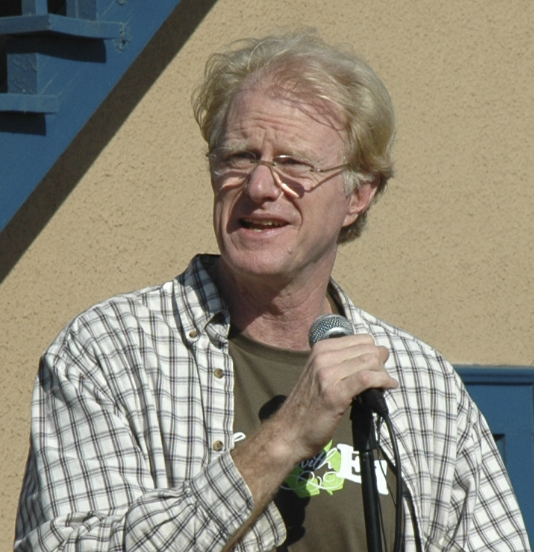
On hand to kick off the event was the legendary poster boy of "walking the walk", Ed Begley, Jr. Ed is so identified with environmental issues that he and his wife (Rachelle Carson) are about to hit HGTV cable television as a reality show Living with Ed on January 1, 2007. Activist/actress Alexandra Paul from the movie "Who Killed the Elecric Car" was also on the pier to support the cause and answer press questions.

Perhaps the most exciting component of the two-day expo will be the free topical seminars. The featured speakers and panelists include Schwarzenegger-Cal/EPA appointee and author Terry Tamminen, Assemblywoman Fran Pavley who authored California's Global Warming Solutions Act, and ex-CIA chief James Woolsey.

At the conclusion of the press event, the attendees were invited to test-drive the vehicles by participating in a caravan to deliver them to the Expo site at Barker Hanger of the Santa Monica Air Center. Those wishing to attend the free event Dec. 9-10 will find it at 3021 Airport Ave. from 9am-4pm.


technorati , , , , , , ,

December 4, 2006

Carbon credits traded online

Welcome to the world's first online community for households and businesses to get paid for reducing the carbon emissions from their everyday energy usage.

With that lead-in we now have an online mechanism for buying and trading carbon credits. Or at least we will with the near future - you can register now but the full service will not be operational until v1.0 testing is complete and v1.5 is released some time in the Spring of 2007.

Below is a proposed (non-functioning) calculator interface for the new service.


This is a harbinger of things to come as the social costs of various industrial, residential, and infrastructural solutions start being valuated by a universal system of carbon credits.

Here is the company's press release from October 4, 2006:

-----------------
Kiwis create world's first website that pays you to save energy.

A New Zealand company has applied to patent Celsias.com, the world's first online community that allows regions, businesses or community groups to be paid for reducing the carbon emissions from their everyday energy use.

Celsias.com is based upon a fast growing global economy that recognises energy savings, or carbon credits, as a form of currency.

"With Celsias.com you can now track, create and trade this new currency on the internet," explains Celsias director, Nick Gerritsen, "it's the first system in the world that allows you to do this all in one place."

Celsias.com is expected to go live in early 2007.

"We believe it very much has the potential to follow in the footsteps of eBay, Google and Skype," comments Gerritsen.

How does Celsias.com work? Businesses or communities can go online, enter their energy expenses each month, for example electricity, and the company they buy from, and the Celsias.com system will automatically calculate their total Ã…ecarbon footprintÃ…f, or how much carbon dioxide they are releasing into the atmosphere.

"You can create a carbon footprint for your home, your business, your community group or any other entity. You can then create carbon credits for yourself by learning how to reduce your energy use and by using our search service to find more energy-efficient products and services. You can then put your carbon credits on the Celsias.com trading system and when someone buys them, you get paid. It's that easy," explains Gerritsen.

Gerritsen adds that carbon credits can be traded internationally among Celsias.com registered members. Registration is free and traders only pay for success.

"Up till now no-one else has provided an end-to-end solution where you can get paid to play your part in solving the climate change crisis," he adds.

Currently, only large organisations have been able to enter the carbon emissions management market. Small to medium businesses and communities, which represent up to 40% of the global energy market, are excluded because they lack the tools and support to join in.

Gerritsen says Celsias.com is unique in many ways. It is the only service to plug into a range of existing accounting software packages to automate energy expenditure data collection for carbon footprint collection; it is the only peer-to-peer global carbon credit trading service that does not require intermediaries; it is the only carbon credit trading platform with no minimum trading volume and it has the only search engine to make it easy to trade in the world's most energy efficient products and services.

So will carbon credits be valuable? This year the carbon credit trading market is forecast to be twice as big as the Google advertising market and grow 10 times as fast. And once the Kyoto Protocol commitment period comes into force from 2008-2012, many governments and businesses worldwide will need to buy surplus carbon credits to meet their agreed emission targets.

The international free market sets the price for emission units or carbon credits. In a recent deal between Meridian Energy and the Netherlands Government, however, the price was set at NZ 10.50 a unit. But the price fluctuates and has been up at NZ 50.00 a unit earlier this year.

Celsias.com also enables anyone (a business, a community group, a school) to set up their own carbon market to aggregate carbon credits for their members _ and derive revenues from this activity - much like eBay's "power sellers".

"Our core goal is to assist our members to create as many carbon credits as possible. Celsias.com will, in effect, pay them to save the world," comments Gerritsen.


technorati , , , , ,

November 22, 2006

General Motors - Live Green/Go Yellow Campaign

General Motors is beginning to promote E85 (a blend of 15% gasoline and 85% ethanol) and their line of Flex-Fuel vehicles in their advertising.

It is estimated that about 4 million vehicles in the U.S. are already E85 compatible. Many owners of certain models of major manufacturer cars and trucks don't realize that their vehicles are already capable of running on ethanol. To remedy this situation, the National Ethanol Vehicle Coalition has published a website listing all E85 compatible vehicles.

GM will be sending yellow fuel caps to the existing owners of E85 compatible vehicles. Later this year, all new GM FlexFuel vehicles will be equipped with yellow fuel caps at the factory.

The National Ethanol Vehicle Coalition also has a listing of all the E85 refueling stations in the nation. Expect this number to grow rapidly as E85 develops more awareness in the marketplace.

-------------------

GM Announces E85 Awareness Campaign
announcement from the National Ethanol Vehicle Coalition

General Motors announced January 8, 2006 a significant E85 awareness campaign at the Chicago Auto Show. The Live Green Go Yellow campaign kicked off during Super Bowl XL in ads promoting the use of the clean, alternative fuel in GM’s flexible fuel vehicles.

Several major Chicago buildings will be illuminated in yellow lights during the show symbolizing the corn used in creating the ethanol in the E85 fuel. Other outreach for this campaign will include GM “street teams” reaching out to Chicagoans in February with giveaways and a major presence in the 2006 NASCAR Craftsman Truck Series and promotions with 2005 NASCAR Nextel Cup champion, Tony Stewart.

“GM is pursuing gasoline-savings solutions on many fronts on the way to our ultimate vision of hydrogen fuel cell-powered transportation,” said Elizabeth Lowery, GM vice president of environment and energy. “E85 ethanol burns cleaner than gasoline and is a renewable, domestic fuel that can enhance the nation’s economy and energy security.”

GM now has nine 2006 models that are compatible with E85: Chevy Impala and Monte Carlo; Chevrolet Silverado, Avalanche and GMC Sierra; Chevrolet Tahoe; and GMC Yukon, Yukon XL and Chevrolet Suburban. The automaker plans to add 400,000 of these vehicles to the fleet in 2006.

Ford Unveils Flex-Fuel Hybrid Research Vehicle

The push is on for more gas efficient, flexible-fuel vehicles. Below is a recent article from Green Car Congress about a car that sports not only hybrid level gas efficiency but also the multiplying benefits of running on E85 ethanol blended gasoline (85% ethanol multiplies by 5 the mpg of gasoline alone). Modifying existing car models (standard or hybrid) is not difficult or expensive so expect more manufacturers to follow suit.

Question: Where will the ethanol come from? Answer: I believe the it will come from locally produced biomass conversion of waste into cellulosic ethanol.

E85 availability will be a limiting sales factor (except in the Midwest), but there is no reason for cars not to be flex-fuel equipped. An estimated 2 million non-hybrid automobiles are already running the roads of the U.S. without their owners necessariy knowing it.

There is speculation that the next generation of hybrid, flex-fuel cars will include electrical plug-in adaptability which will enable even more mileage per fossil fuel gallon and lower emissions.

Excerpts from the article appear below...

Ford Unveils Flex-Fuel Hybrid Research Vehicle
25 January 2006

Escape Hybrid E85
At the Washington Auto Show, Ford unveiled the Ford Escape Hybrid E85, a version of its Escape hybrid with a flexible-fuel engine capable of running either gasoline or ethanol blends of up to 85% (E85).

The research vehicle is the first from a major car company to actually mate the two technologies (flexible-fuel engines and hybrid powertrains) together, although the potential of the combination is being increasingly mentioned by policymakers.

As a leader in both hybrid vehicles and in vehicles capable of operating on ethanol-based fuels, Ford is the ideal company to bring both technologies together for the first time.

This innovative research program could lead to breakthroughs to significantly reduce our nation’s dependence on imported oil while also helping to address global climate change.


—Anne Stevens, EVP, Ford Motor, and COO, The Americas

The Ford Escape Hybrid would produce about 25% less carbon dioxide if operated exclusively on E85 fuel instead of gasoline, according to the company.

Ford engineers working on the Escape Hybrid E85 research project are seeking not only to optimize the efficiency of the new powertrain, but also to resolve some emissions issues.

Ford researchers also hope to apply a number of proprietary engine technologies being developed for future application that could further increase the fuel economy performance of a hybrid FFV.

Ford has two full hybrid electric vehicle models on the road today—the Ford Escape Hybrid and the Mercury Mariner Hybrid—with more models on the way and a targeted increase in hybrid production capacity to 250,000 hybrid vehicles a year globally by the end of the decade.

The company will also produce up to 250,000 flexible-fuel vehicles (FFVs) this year, including the Ford F-150 pickup truck, as well as the Ford Crown Victoria , Mercury Grand Marquis and Lincoln Town Car large sedans.

General Motors - Marketing Flex-Fuel Cars Nationwide


There are two articles that indicate that General Motors (GM) is getting serious about marketing Flex-Fuel Vehicles (FFV) in the U.S.

FFVs are cars that have been modified to run on both gasoline or ethanol. They feature stronger fuel lines (ethanol is more corrosive than gasoline) and a device that can differentiate the particular blend of ethanol/gasoline in the tank to adjust carburetion. The upgrade cost to GM to produce a FFV from a normal model is surprisingly cheap (a few hundred dollars), particularly when compared to the upgrade cost of hybrids or EVs. They have been manufacturing and marketing FFVs in Brazil for years (where all new cars will be FFVs beginning in 2007).

The first article from Treehugger Blog details a joint initiative made by GM, the State of California, Chevron, and an alternative fuel company called Pacific Ethanol (which Bill Gates has invested in through his personal investment company).

The second article comes from a press release (1/4/2006) by the National Ethanol Vehicle Coalition concerning GM's "First E85 National Ad Campaign". It is reprinted here in its entirety.

-----------------

GM Serious About Ethanol And Flex-Fuel Vehicles?
January 5, 2006 06:07 PM - Michael G. Richard, near Ottawa

Excerpts from the GM press release...

General Motors will help lead a joint demonstration project along with the state of California, Chevron Technology Ventures, and Pacific Ethanol to learn more about consumer awareness and acceptance of E85 as a motor vehicle fuel by demonstrating its use in GM’s flexible-fuel vehicles. The announcement was made as a result of a non-binding understanding made public today at the Los Angeles Auto Show.

GM intends to offer between 50 to 100 of its E85-capable Chevrolet Impala passenger cars and Silverado pickup trucks for consideration in the state’s annual competitive bid process. Flexible-fuel vehicles will be used by the California Department of Transportation (CalTrans) at various operations in Northern California and the state’s Central Valley. Chevron Technology Ventures intends to work with CalTrans to provide E85 fuel and install the necessary refueling pumps in these locations. Pacific Ethanol, a California-based ethanol production and marketing company, intends to provide the ethanol to Chevron Technology Ventures for the project.


GM’s environmental consultant has assured us that GM is aware of the problems facing corn ethanol production and that, while the fuel may initially be made from corn, that cellulosic ethanol is a potential choice for the future. Apparently, GM does have a relationship with Iogen, a leading Canadian cellulosic technology manufacturer (see this press release). We'll have to wait and see where that goes, but the quicker the public stops to think that ethanol equals corn, the better.

-----------------

First E85 National Ad Campaign

Jefferson City, MO – The first flexible fuel vehicle/E85 national advertising campaign has been kicked off by General Motors. Advertisements in the January 4, 2006 editions of the USA Today and Wall Street Journal describes the new GM 2007 E85 Chevy Tahoe.

The full page ads includes statements regarding the ability of the Tahoe to operate on the clean, renewable product. It also directs individuals to the NEVC website, www.E85Fuel.com, to locate availability of E85.

“To my knowledge, this is the first time that any automaker has included a reference to the FFV capability of a vehicle in a national advertisement,” stated Phil Lampert, Executive Director of the NEVC. “While I obviously only have access to regional versions of these two very large circulation papers, we are very pleased that GM has included information in these ads acknowledging the E85 capability of the new Tahoe!”

The 2007 Tahoe will be available January 10. Different from the 2006 Tahoe, the new model will offer a feature called Active Fuel Management™ where the engine will provide power to all eight cylinders when needed and only four when not needed.

General Motors has been a long time supporter of E85 and a member of the NEVC.

ISAF 2005: Alcohol Fuel Flexibility - Progress and Prospects

NOTE: The International Symposium on Alcohol Fuels held its 15th annual meeting Sept. 26-28, 2005 in San Diego, CA. There were many important and timely papers and presentations delivered at the event for which I will provide abstracts.
Thomas MacDonald of the California Energy Commission provided evidence that "alcohol flexible fuels vehicles" (a.k.a., Flex-Fuel Vehicles - FFV - that run on blends of gasoline and ethanol) "represent a mature, low-cost technology option for reducing reliance on petroleum transportation fuels." Should FFV development and infrastructure continue and expand, "alcohol fuel flexibility offers an achievable and inexpensive means of adding motor fuel supply diversity and of substituting alcohol fuels for gasoline."

The most obvious evidence of this is taking place in California. Pollution considerations in metropolitan areas of the state created substantial interest in additives that would oxygenate gasoline to combust more of each gallon while reducing harmful emissions. MTBE's were the initial additive backed and implemented by the petroleum refiners. However, MTBE's could not be stored without leakage, which fouled water resources - the cure being worse than the disease. At the end of 2003, California banned MTBE's in favor of more plentiful and benign ethanol. As a result 5.7% of all gasoline sold in California is actually ethanol as mandated by regulations, approaching one BILLION gallons per year. Currently 99% of this ethanol is imported into California from other states. This E6 (6% ethanol) gasoline runs without modification in all gasoline engines as would for any blend containing up to 10% ethanol (E10).

How costly would it be to modify current models of automobiles to make them FFVs? MacDonald states that "the incremental cost to the industry of producing full model lines of FFVs has been reduced to a very nominal amount, $100 per vehicle or less by some industry estimates." Because of FFV demand in Brazil and the Midwestern U.S., most major manufacturers of automobiles (including Ford, GM, Chrysler, and Volkswagen) offer FFV versions of their most popular automobiles.

He offers Brazil as an example of a society that has made a commitment to a fully ethanol/gasoline FFV fleet after 30 years of ethanol and infrastructure development. In Brazil, the average price of gasoline is 1.66 times the average price of ethanol. By 2007, all new automobiles sold in Brazil will be FFVs.


He concludes that "further national initiatives and investments aimed at expansion of FFV production and E85 fueling infrastructure need to be part of a clear overall national agenda for petroleum reduction and a specific straegy for the role of ethanol as a transportation fuel."