Showing posts with label biochemicals. Show all posts

June 7, 2007

Pipeline research for ethanol transport

New bipartisan legislation is being introduced to the U.S. House of Representatives and Senate that propose funding research to investigate transport of ethanol by pipeline.

I think the proposal is an excellent idea and a quite relevant area of research for site developers with whom I work.

I would like to know the results of the kind of pipe research that is being proposed. Not being able to pipe ethanol is a drawback in comparison to fossil fuels because of the relative trouble and expense (not to mention emissions) of hauling it any other way.

Conventional understanding of the problem of piping ethanol is that 1) it is susceptible to water contamination from pipe leaks and 2) it is best not to alternate between other fuels and ethanol using the same pipes.

Once an industrial site is built, it frequently converts to similar industrial usage because of the raw material, zoning, and transportation corridor development that went into it. There are existing pipes that connect prospective biorefinery sites with existing transportation hubs that could be upgraded at relatively low expense compared to these hauling costs - saving time and money.

Could pipes that carted chemicals and fuels yesterday be upgraded to service ethanol today and maybe other fuels like biobutanol tomorrow? Maybe the research could give us the answers.

Here are excerpts from a recent article on the announcement...

----------------
Study sought on ethanol pipelines
Supplement to rail transport appears vital as industry expands, Boswell says
By William Ryberg
DesMoines Register Business Writer
May 30, 2007

Two members of Iowa's congressional delegation want to know whether pipelines would be a good way to get ethanol transported across the country in the future.

Rep. Leonard Boswell, D-Ia., held a news conference Tuesday to announce that he'd introduced a bill in the U.S. House asking for a $2 million study of the feasibility of transporting ethanol by new or existing pipeline. Sen. Tom Harkin, D-Ia., introduced a similar bill in the Senate.

Boswell, in a statement, said practical and economical ways to transport ethanol across the country need to be found because the industry continues to expand.

Pipelines are a major mover of gasoline, diesel fuel and jet fuel in the United States, but ethanol is moved primarily by rail car.

The bill would direct the U.S. secretary of energy to award money for a study of the feasibility and value of using pipelines to transport ethanol from the Midwest, where it's generally produced, to the eastern and western United States.

Currently, movement of ethanol through pipelines leads to "stress corrosion cracking" in the pipe and welds, Bruce Heine, director of government and media affairs for Magellan Midstream Partners of Tulsa, Okla., said after the news conference. Magellan is a pipeline company with a major terminal near Des Moines.

technorati , , ,

June 3, 2007

Bioethanol or Biodiesel - Which is better?

As a recent article on The Motley Fool (Fueling the Debate: Ethanol vs. Biodiesel) points out, comparing bioethanol and biodiesel is like comparing running or swimming - both are healthy exercises. But it is a good idea to know what the comparable benefits are because there are new technologies being developed all the time and the impact on biofuel infrastructure development is the key to implementation.

For example, as reported by Green Options recent algae farming research at Utah State University predicts that "oil yields of 10,000 gallons per acre could become an economically feasible biodiesel feedstock by the end or the decade. Our most productive feedstock today, the oil palm, doesn't even come close with yields of 635 gallons/acre, and is followed distantly by the U.S. standard, soy, at 48 gallons of oil/acre."

Given the other benefits of biodiesel, such an innovation could mean that more infrastructure and vehicle development should be directed toward exploiting the use biodiesel. Then again, research into cellulosic feedstock bioconversion tends to support the notion that bioethanol and biobutanol will be the superior solution.

Since the infrastructure and market for biodiesel are much better in Europe, it is likely that implementation for biodiesel would take place there. Conversely, ethanol would make more sense in North America.

Regardless, we should be putting renewable energy "trains" on a wheelhouse full of tracks because the ultimate solution will be to develop many sources of feedstock and renewable energy solutions destined for implementation throughout the world.

----------------
Fueling the Debate: Ethanol vs. Biodiesel
Which alternative fuel should investors tie their horses to?
By Jack Uldrich
THE MOTLEY FOOL

According to a study published last summer in the peer-reviewed Proceedings of the National Academy of Sciences, the environmental benefits of biodiesel are substantially greater than those of ethanol. According to the report, biodiesel provides 93% more net energy per gallon than is required for its production, while ethanol generates only 25% more net energy. The study further suggested that biodiesel, when compared with gasoline, reduced greenhouse emissions by 41%, while ethanol yielded only a 12% reduction. From these viewpoints, it would appear that biodiesel is the clear winner.

If only it were that easy. From a land-use and agricultural-efficiency perspective, ethanol appears to be the better choice. That's because an estimated 420 gallons of ethanol can be produced per acre of corn versus only 60 gallons of biodiesel per acre of soybeans. In more practical terms, this means that if the production of biodiesel were ever to increase greatly, the cost of soybean oil would rise significantly.

What's so exciting about cellulosic ethanol is that it has the potential to offer a very high net-energy impact. It can also be produced from feedstocks that use little to no fertilizer. These sources are abundant and aren't major sources of food -- and thus won't drive up food prices as we've seen as of late with corn prices. As an added benefit, it's believed that as the technology improves, the amount of ethanol produced per acre can increase significantly. Some experts have estimated that the figure could reach as high as 2,700 gallons per acre by 2030.

In short, cellulosic ethanol may very well have the environmental benefits of biodiesel and the agricultural efficiency of corn ethanol, but it can also potentially bring additional benefits to the table.

technorati , , ,

April 7, 2007

BIOoutput 101: The BioTown Sourcebook

For anyone who desires a simple introduction to the current range of potential BIOoutput products, I suggest a careful reading of a brief technical overview document called The BioTown, USA Sourcebook of Biomass Energy (released in April, 2006). It was written for the Indiana State Department of Agriculture by scientist and fellow blogger, Mark Jenner, PhD. who has his own website called Biomass Rules.

Below you can see an overview graphic that charts where bioconversion products (highlighted in blue) fall in proper context for addressing BIOstock, BIOconversion, and BIOwaste issues. For this reason, I offer a similar 101 abstract treatment in each of my BlogRing blogs.

This BioTown sourcebook is the official inventory on local energy use, available biomass fuels and emerging technologies for Reynolds, Indiana. As such, it can serve as an inventory template for any similarly focused study of a medium-sized rural community. It greater importance is its microcosmic view of rural communities as decentralized, sustainable entities that possess more than enough biomass to service their own energy needs.

Part of the report is devoted to an accounting of the existing energy demand in BioTown: transportation fuels, electricity, and natural gas. As the author states:

The bottom line is that as the cost of fossil fuel-derived energy continues to roughly double every five years, the value of biomass energy makes excellent economic sense. Agricultural commodity prices have remained competitively low for decades. Historically, if the supply of corn, beans, or even hogs is below demand, more are grown the next year – keeping commodity prices low.

At right is a broad "list of product categories from the Guidelines for Designating Biobased Products for Federal Procurement" drafted in 2003 (click to enlarge). "This federal rule-making process was part of a federal policy to procure supplies that made from bio-based material and meet specific criteria." Those criteria are spelled out as percentages of minimum biobased content necessary to qualify. It demonstrates the incredibly broad range of applications the output of bioconversion processes can be applied to.

This report is not a utopian call to return to rural, communal living. It is, instead, an affirmation that there are many biomass resources available and technologies in development to provide environmentally clean bioenergy alternatives to the existing fossil fuel energy paradigm. Rural communities can develop expertise and marketable output best suited to their own resources and industries. Urban communities can develop some technologies that are relevant to the diversion of trash from landfills.

----------------
The BioTown, USA Sourcebook of Biomass Energy

BioTown, USA is Indiana Governor, Mitch Daniel’s, bold approach to develop local renewable energy production, create a cleaner environment, find new solutions to municipal/animal waste issues, and develop new markets for Indiana products – all at the same time. BioTown, USA is quite simply the conversion of Reynolds, Indiana from a reliance on fossil fuels to biomass-based fuels. With the implementation of BioTown, USA, a template will be set that simultaneously promotes Indiana energy security, rural development, profitable agriculture and a green, thriving natural resource environment.

The only conclusion that can be made is that BioTown, USA is profoundly thermodynamically and technologically viable. Reynolds, Indiana used 227,710 million BTUs (MMBTU) in 2005. White County annually produces over 16,881,613 MMBTU in undeveloped biomass energy resources. That is 74 times more energy than Reynolds consumed in 2005.

BioTown, USA is a concept whose time has come. This Sourcebook and subsequent BioTown reports will serve as vital stepping stones to the implementation of BioTown, USA and subsequent bioeconomic rural development opportunities across Indiana and the nation.

technorati , , , , ,

March 31, 2007

Using fungi to produce ethanol & biodegradeable material

Biopact has run a story about a Swedish science team whose research into Zygomycetes (an order of more than 100 different fungi) has discovered a saprophyte that grows easily in waste and drainage that converts it into ethanol and can be used to extract an unbelieveably useful super-absorbent and antibacterial cell-wall material that is biodegradeable!

Is it April 1st yet? You might want to look at the source article that appeared in the European Research website. As they report "The bottom line is that this discovery will benefit not only nature, but the paper industry and manufacturers of diapers and feminine hygiene products as well."

----------------
Scientists discover fungus to convert biomass into ethanol, and into biodegradable antibacterial and super-absorbent material

A research team at University College of Borås in Sweden, headed by Professor Mohammad Taherzadeh, in collaboration with scientists from Göteborg University has made a unique discovery. It consists of a fungus that converts biomass waste into ethanol in a highly efficient manner. Moreover, from the residual biomass resulting from the ethanol production the researchers were able to extract a powerful antibacterial and super-absorbent material that can be used in the hygiene industry (medical and sanitary napkins, etc...). The material is biodegradable, and promises to solve a significant waste problem.

Being able to convert sulfite lye for the production of ethanol is good news, in both economic and environmental terms. Sulfite lye, which is a byproduct of the production of paper and viscose pulp, is difficult for factories to dispose of since it contains chemicals that must not be casually released in nature. From being a highly undesirable byproduct for the paper industry, sulfite lye will now be an attractive raw material for the extraction of ethanol:

"Today baker's yeast is used for the production of ethanol, but we have found a fungus that is more effective than baker's yeast," says Mohammad Taherzadeh, professor of biotechnology at the School of Engineering, University College of Borås, and one of the world's leading ethanol researchers.

Zygomycetes are not only highly effective in producing ethanol; the research team also found that the biomass that is left over in the production of ethanol can be used to extract a cell-wall material that is super-absorbent and antibacterial. What's more, it's a biological material that can be composted and recycled:

This discovery opens an entirely new dimension for research on the fungi, according to Mohammad Taherzadeh, whose project "Production of antimicrobial super-absorbent from sulfite lye using zygomycetes" was recently awarded more than 800,000 Swedish Crowns (€85,000/US$ 114,000) from the Knowledge Foundation to continue its research into this cell-wall material.


technorati , , , , ,

January 29, 2007

From Food to Fuel to Fashion

Well, it's not exactly up to the level inspired by George Washington Carver yet, but take it as an indication that one of the benefits of a paradigm shift to renewable biofuels will be stimulation of new byproduct and side-stream chemical industries. Aside from further weaning us from petroleum waste conversion, bioproducts are good "carbon sinks" and, more often than not, biodegradable.

Here was a little fun at the BIO 2006 conference:

----------------
From Food to Fuel to Fashion
BIO 2006 Features Consumer Products Made With Industrial Biotechnology
by Paul Winters at BIO

On Monday, April 10, during the BIO 2006 International Conference, BIO hosted a media brunch, "From Food to Fuel to Fashion: Industrial Biotech Does It All." The brunch provided reporters an opportunity to taste, use, and see products produced through industrial and environmental biotechnology, as well as learn how these technologies can enable energy security.

The highlight of the brunch was a fashion show with models wearing everyday clothing and designer clothes made from polylactic acid (PLA), a compostable biopolymer made from dextrose corn sugar. There were also exhibits of products made from PLA and polyhydroxyalkanoate (PHA), including bedding products, packaging materials, and baby products.

The menu featured foods made with the help of enzymes or flavorings manufactured through industrial biotechnology, including yogurts, breads and rolls, meats, and juices. All foods and beverages were served on bioplastic plates, cups and utensils made from agricultural feedstocks, instead of oil.

(Sue Cischke, Vice President, Environment and Safety Engineering at Ford) outlined Ford's interest in biotechnology, reminding the audience, "Henry Ford maintained a keen interest in materials that could be grown on the farm and built into automobiles." Ford, she said, is looking to form a coalition of industries - including automobiles, fuel distributors, and innovators - to work toward the goal of replacing petroleum-based products in industry.

Brent Erickson, executive vice president of BIO's Industrial and Environmental Biotechnology Section, hosted the event.

Erickson predicted that 2006 would be the tipping point in the creation of a biobased economy in the United States, with renewable products replacing petroleum-based products in countless industries.


technorati , , , , ,

January 21, 2007

BioButanol from Cellulosic Bioconversion

One product from bioconversion that is getting recent press is biobutanol - a non-corrosive biofuel similar to ethanol with energy content similar to gasoline that can be mixed with gasoline.

Here is story from Green Car Congress about Green Biologics, a company that is using hydrolysis with patented bacteria to convert biomass into biobutanol.

----------------
Green Biologics Awarded £560,000 for Cellulosic Biobutanol Development

Green Biologics (GBL), an Oxfordshire (UK) biotechnology company, has received £560,000 (US$1.1 million) in funding to support the development of its fuel biobutanol product—Butafuel—from cellulosic biomass. The Department of Trade and Industry-led Technology Program is providing £250,000 (US$494,000), and shareholder investors and business angels are providing the rest.

Using its library of thermophiles and thermostable enzymes, GBL has isolated a cocktail of thermophilic microorganisms for the rapid enzymatic hydrolysis and release of fermentable sugars from biomass. The company plans to integrate this patented hydrolysis technology with a proprietary butanol fermentation process.

The major barrier to butanol production has been the high cost of the conventional starch fermentation process. Our expertise in microbial strain development, together with EKB’s innovative process technology and the use of non-edible food stocks, should lead to a step change in the economic viability of the manufacturing process—we are aiming for a two- to three-fold reduction in cost. We are effectively using our knowledge of enzymology, microbial physiology and fermentation to optimize and ‘re-commercialize’ the butanol fermentation process.
—Dr Edward Green, Green Biologics Founder & CEO

Butanol (C4H10O) is a four-carbon alcohol in widespread use as an industrial solvent. Originally produced by fermentation starting nearly 90 years ago (using Clostridia acetobutylicum), butanol shifted to becoming a petrochemically-derived product in the 1950s as the price of petrochemicals dropped below that of starch and sugar substrates such as corn and molasses. Virtually all of the butanol is use today is produced petrochemically.

Butanol has a number of attractive properties as a fuel. Its energy content is closer to gasoline than ethanol’s. It is non-corrosive, can be distributed through existing pipelines, and can be—but does not have to be—blended with fossil fuels. Butanol itself could be reformed for hydrogen for use in fuel cells, and the production process itself produces hydrogen.

In June 2006, BP and DuPont recently announced a collaboration with British Sugar to produce biobutanol in the UK. BP provides a route for butanol into the transport fuel market and aims to blend butanol with gasoline at its 1,200 filling stations.


technorati , , , , , ,

November 22, 2006

Developing Ethanol's Side-stream Chemicals

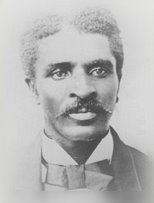
Who will be the George Washington Carver of the developing ethanol industry? Carver is best known as the inventor of over 300 uses for peanuts during the late 19th century - but that is probably the least of his accomplishments. This slave orphan broke racial barriers to persevere as a student, scientist, and Tuskegee Institute educator for all Southerners who struggled to survive the post-Civil War era. He developed crop rotation techniques for investing depleted soil with soil-enriching crops like peanuts, sweet potatoes, and pecans and then extended their marketability by inventing new recipes for their use.

The current ethanol challenges? New agronomy techniques will have to be developed to reduce the use petroleum-based fertilizers while improving the soil sustainability and cultivation of ethanol feedstocks. To make biorefineries more self-sufficient, there is a great need for the industry to implement developing pre-processing techniques for sorting feedstock and making new side-stream chemicals. As the industry grows, new products will come from ethanol itself and the purges that are the byproducts of each feedstock's processing.

In an press release posted on the Georgia Tech Research News website, Professor Charles Eckert provides insight into efforts being made to make the ethanol industry more viable. He describes coordinated and cross-discipline approaches being pursued by him and his colleagues.

--------------------
Leveling the Playing Field: High-Value Chemicals Produced from Ethanol Feedstocks Could Boost Biorefinery Economics

Biorefineries developed to produce ethanol from cellulose sources such as trees and fast-growing plants could get a significant economic boost from the sale of high-value chemicals – such as vanillin flavoring – that could be generated from the same feedstock. Revenue from these “side stream” chemicals could help make ethanol produced by biorefineries cost competitive with traditional fossil fuels.

“It seems unlikely that fuel from a biorefinery – at least in the beginning – is going to be as cost-effective as fuel from traditional fossil sources,” said Charles Eckert, a professor in the School of Chemical and Biomolecular Engineering at the Georgia Institute of Technology. “To make the biorefinery sustainable, we must therefore do everything we can to help the economics. If we can take a chemical stream worth only cents per pound and turn it into chemicals worth many dollars per pound, this could help make the biorefinery cost effective.”

To help make that happen, Eckert and collaborators Charles Liotta, Arthur Ragauskas, Jason Hallett, Christopher Kitchens, Elizabeth Hill and Laura Draucker are exploring the use of three environmentally-friendly solvent and separation systems – gas-expanded liquids, supercritical fluids and near-critical water – to produce specialty chemicals, pharmaceutical precursors and flavorings from a small portion of the ethanol feedstock. The green processes could produce chemicals worth up to $25 per pound.

“These are novel feedstocks for chemical production,” Eckert noted. “They are very different from what we’ve dealt with before. This gives us different challenges, and provides a rich area for interdisciplinary research.”

Using near-critical water and gas-expanded liquids, Eckert and his colleagues have already demonstrated the production of vanillin, syringol and syringaldehyde from a paper mill black liquor side stream. They have also proposed a process that would generate levulinic acid, glucaric acid and other chemicals from the pre-pulping of wood chips. That process would use an alcohol-carbon dioxide mixture, followed by depolymerization and dehydration in near-critical water.

Research aimed at producing high-value products from cellulose feedstocks is being done through the “AtlantIC Alliance for BioPower, BioFuels and Biomaterials,” a coalition of three research institutions in the United States and the United Kingdom. The alliance, which includes Oak Ridge National Laboratory, Imperial College and Georgia Tech, seeks to solve the complex issues involved in economically producing ethanol fuel from cellulose materials such as wood chips, sawgrass, corn stovers – and even municipal waste.

“The feedstock would likely be different in different geographic locations, depending on what was readily available,” Eckert noted. “In the Southeast, we have abundant forest resources. In the West, sources would include sawgrass, corn stovers and similar plant materials. In the United Kingdom, there is strong interest in producing fuels from municipal wastes.”

The Alliance is taking a comprehensive approach to the biorefinery, conducting studies of how to maximize plant growth through genetic engineering, developing new microbial techniques for digesting cellulose, and applying environmentally-friendly chemical processes for reactions and separations. The organizers decided to pursue only non-food sources as their feedstock.

Using tunable solvent systems in the biorefinery would avoid the generation of wastes associated with processes that depend on strong acids – which must be neutralized at the end of the reaction.

For instance, near-critical water – familiar H2O but at 250 to 300 degrees Celsius under pressure – separates into acid and base components that can be used to dissolve both organic and inorganic chemicals. When the pressure is removed, the water returns to its normal properties.

Gas-expanded liquids, such as carbon dioxide in methanol, provide a flexible solvent whose properties can be adjusted by changing the pressure. When the reaction is over, the pressure is released, allowing the carbon dioxide to separate from the methanol.

Supercritical fluids, such as carbon dioxide under high pressure, simplify separation processes. Separation of the carbon dioxide from chemicals dissolved in it requires only that the pressure be reduced, allowing the CO2 to return to its gaseous state.

Though many challenges remain before biorefineries can be designed and built, Eckert says it is important to invest now in this renewable source of energy and chemicals.

“To make the biorefinery work will require a major effort that must be well coordinated among everybody working on it,” he said. “The biorefinery is one of several answers that we need to pursue as part of a national energy strategy. Our future economic well-being requires us to deal with the energy issue.”

Eckert described the green processes Sept. 10 at the 232nd national meeting of the American Chemical Society. The presentation was part of a session “Green Chemistry for Fuel Synthesis and Processing.”

In 2004, Eckert and Liotta received a Presidential Green Chemistry Challenge Award for their development and promotion of benign tunable solvents that couple reaction and separation processes.


technorati , , , , , ,